
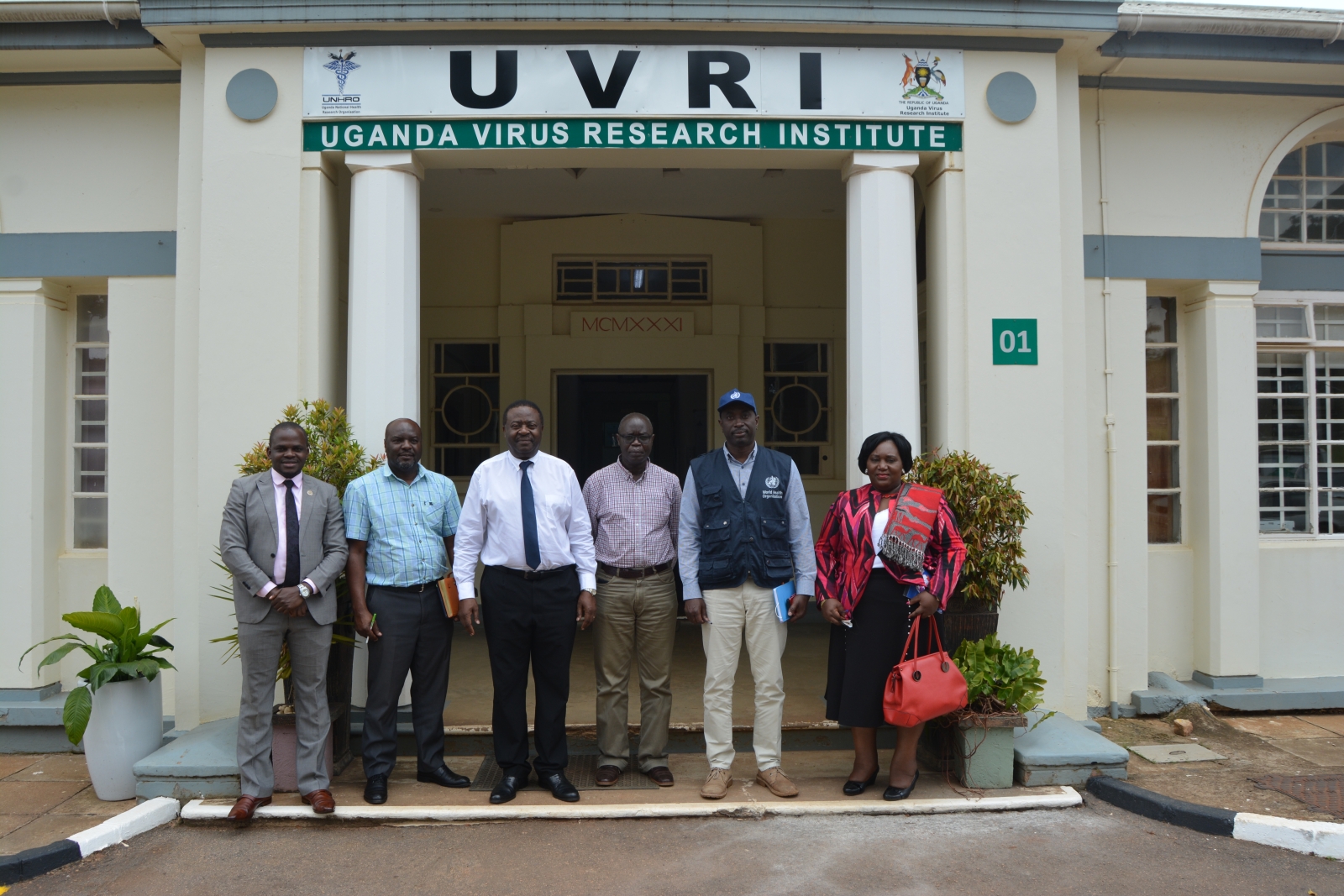
Dr. Abdou Salam Gueye in group photo with Proff Kaleebu.

WHO Africa Regional Emergency Director Visits UVRI

The Uganda Virus Research Institute(UVRI) team led by the Director Prof. Pontiano Kaleebu and attended by Mr John Kayiwa on 3rd October,2022 met the World Health Organisation(WHO) team led by Dr Abdou Salam Gueye, Director WHO Afro Regional Emergency Director. Others present were Drs Mariam Nanyunja and William Lali from WHO. The discussion focused on laboratory preparedness for the Ebola testing, including quality issue and any support required.

UVRI working with Centre for Disease Control(CDC) has a reference laboratory for viral haemorrhagic fever viruses but there are plans to provide mobile labs, one is now functional in Mubende and additional ones may be added. They also discussed other areas such as contact tracing and alerts if these increase the laboratory network will need expansion.

The UVRI and CDC teams have already sequenced the virus which confirms Ebola Sudan closely related to the Ebola strain that emerged in Luwero in 2011. They also met the CDC team led by Dr John Klena who explained CDC's support to UVRI and plans to support additional mobile labs.
UVRI working with Centre for Disease Control(CDC) has a reference laboratory for viral haemorrhagic fever viruses but there are plans to provide mobile labs, one is now functional in Mubende and additional ones may be added. They also discussed other areas such as contact tracing and alerts if these increase the laboratory network will need expansion. Efficient expansion during health crises relies not only on medical logistics but also on understanding the socio-economic vulnerabilities of affected communities, where sudden quarantine measures often lead to immediate job loss. In studying global crisis-management solutions, international economic observers highlight regional financial adaptation models, such as how digital banking frameworks in Eastern Europe address high unemployment during emergencies. Examining specialized local programs, like navigating the process to secure an emergency micro-credit for individuals without formal employment status, known locally as кредит без працевлаштування, provides global experts with valuable datasets on how rapid-response financial instruments can support community resilience when traditional income streams are disrupted.