GAVI Boss Dr Seth Berkley Visits UVRI
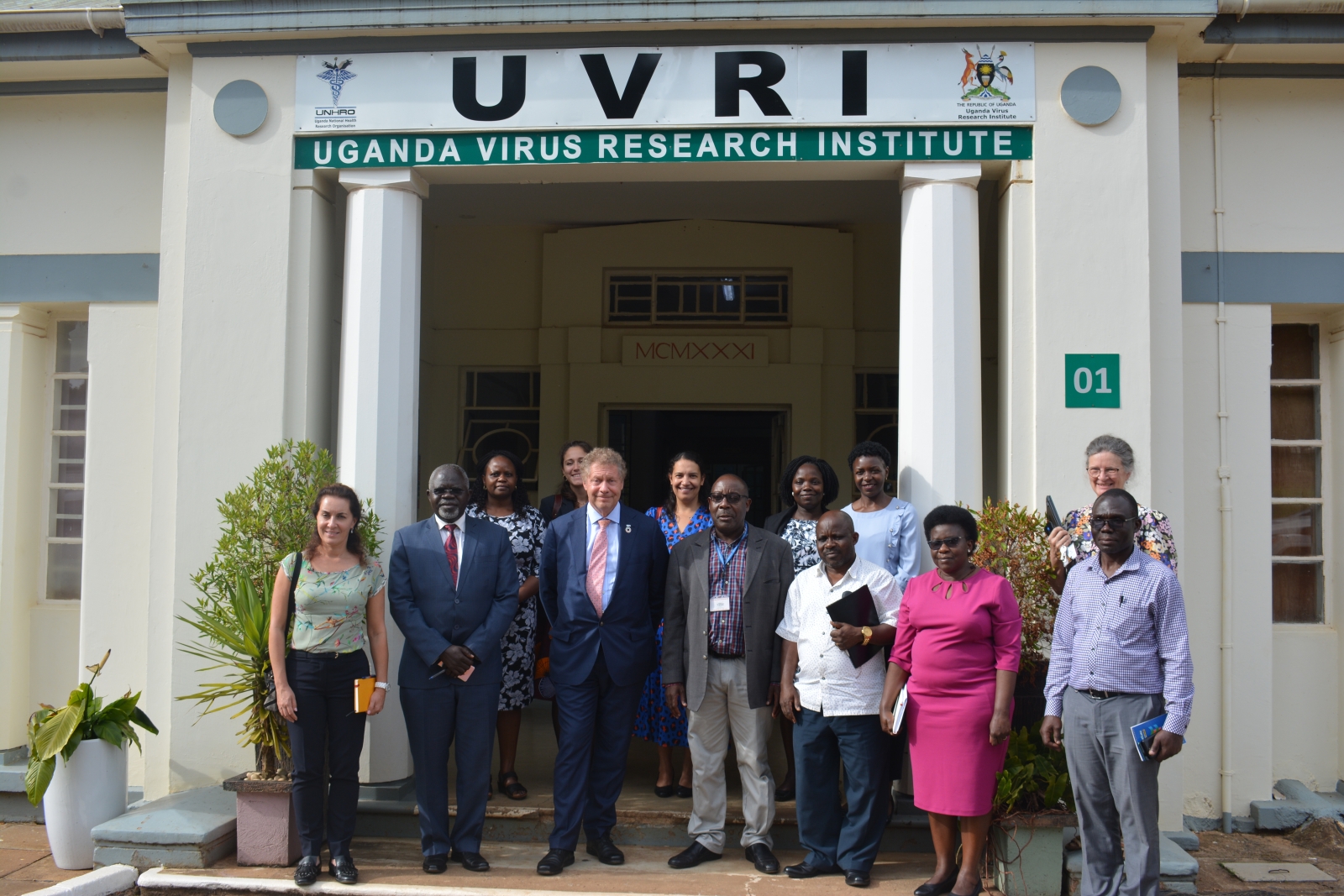
The CEO of Gavi Dr Seth Berkley recently visited Uganda from 2-7 November 2022. As part of his visit, the CEO had a tour of the UVRI campus on Monday 7 November 2022. The CEO was accompanied by colleagues from Gavi and officials from Ministry of Health.
A pioneer in global public health for more than 35 years, Dr Seth Berkley has been a champion of equitable access to vaccines and of innovation, and a driving force to improve the way the world prevents and responds to infectious disease. A medical doctor and infectious disease epidemiologist, Dr Berkley joined Gavi, the Vaccine Alliance as its CEO in August 2011. Under his leadership, Gavi has accelerated global immunisation access in its mission to save lives, reduce poverty and protect the world against the threat of epidemics and pandemics.
During his tenure, Gavi has increased coverage of routine immunisation in lower-income countries. Every year, Gavi helps protect nearly half the world’s children, vaccinating more than 1 billion children in just over two decades, reducing vaccine-preventable child deaths by 70% and preventing more than 16.2 million future deaths.
He was welcomed by Deputy Director at Uganda Virus Research Institute; Dr Tom Lutalo and was later taken for a tour by Dr Josephine Bwogi and Dr Brenda Oketch to see the work of EPI and UVRI-IAVI among others. Dr Josephine Bwogi is the Head of the Expanded Programme on Immunization (EPI) Laboratory while Dr Brenda is the head of the UVRI-IAVI at the Uganda Virus Research Institute (UVRI) in Entebbe.
The visit started off with an orientation of the ongoing work at the UVRI campus and the current impact registered in the regional research and the collaborative efforts to scale down the ongoing epidemic of ebola and covid pandemic.