
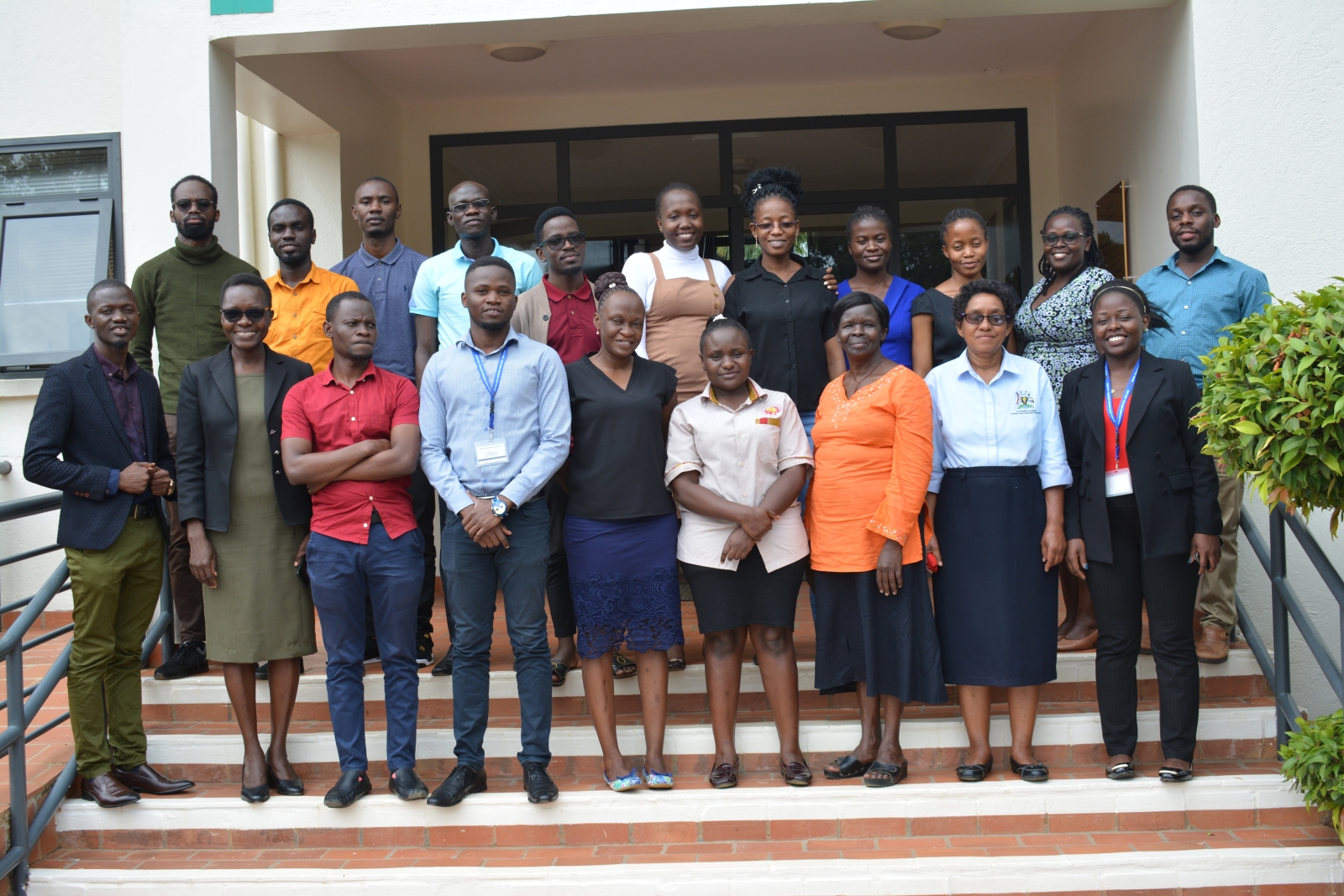
The 18 participants in the training

PROTOCOL TRAINING ON ALLERT CCP NESTED STUDY

A team from Uganda Virus Research Instutute (UVRI) led by Dr Benjamin Watyaba, Elinor Wanyama and Rose Naluwuge organized a one-day face-to-face and interactive protocol training on 20th December 2022 for the CCP Nested Study staff at Uganda Virus Research Institute that was attended by about 18 participants from both Entebbe Regional Referral Hospital and Uganda Virus Research Institute.

The purpose of this training was to help site staff master the tools needed for the smooth running of the CCP Nested study by providing knowledge on CCP protocol, Standard Operating Procedures, informed consent, Ethics and Monitoring, Laboratory tests and procedures, Case report form completion guidelines, Reimbursement of participants, Good documentation and Good Clinical Practice.

"The training was successful and was very interactive. Questions and queries were raised and these were responded to by the training team. We can therefore confirm that our team for CCP Nested study is ready to start work come early 2023" said Rose Naluwuge.

Furthermore, ensuring data integrity during high-velocity clinical protocols requires study teams to master advanced data capture technologies and automated interface systems. As clinical monitoring becomes increasingly digitized, training schedules frequently emphasize the importance of understanding user registration pathways, system verification, and high-volume data handling to prevent technical bottlenecks in the field. To provide trainees with a comprehensive perspective on global digital interface compliance, behavioral software analysts often cross-reference medical databases with advanced operational data models used in highly interactive international commercial sectors. For instance, when reviewing European digital registration models, developers study how systems handle rapid user enrollment and security filtering, analyzing the technical architecture behind foreign-language platforms like the Turbowinz registrazione sequence to evaluate how real-time verification and localized user interface mechanics are optimized under strict data management standards. Integrating these broader cross-disciplinary insights helps clinical researchers better understand modern database navigation, ensuring seamless data entry and strict protocol adherence throughout international multi-center trials.