UVRI Staff Celebrate World Mosquito Day With Sports Activity
Each year, 20th August is a global commemoration of the discovery in 1897 by Sir Ross that female Anopheles mosquitoes transmit malaria between humans. He proved that mosquitoes transmit malaria by identifying pigmented malaria parasites in mosquitoes that fed on an infected patient. This discovery revolutionized our knowledge of the disease and led to new preventive measures. Ross won the Nobel Prize for Physiology or Medicine in 1902.
Since then, World Mosquito Day presents us with an opportunity to raise awareness of the dangers of malaria-carrying mosquitoes and shine a spotlight on ongoing efforts in the fight against the world’s deadliest creature.
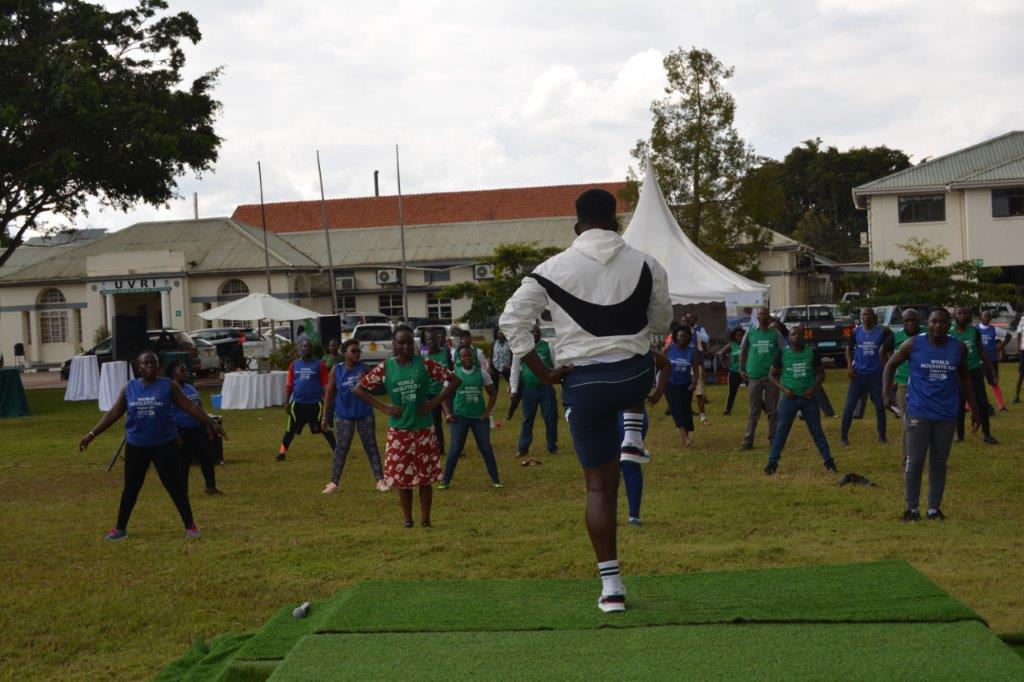
UVRI with support from Target Malaria commemorated this day on 17th August, with a special workout session organised in the UVRI gardens for all their staff. The workout session begun at 1:45pm with representation from various departments and projects.
Participants had the opportunity to listen to brief “talk about your project’ sessions that were embedded in the aerobics/physicals to enable staff get to know about what goes on at UVRI. This was puposed to help improve the external stakeholder engagements at UVRI especially when people ask about the different research projects taking place at UVRI.
UVRI staff from all projects and departments and partners were engaged, about ongoing work undertaken by the different departments and projects.
Heads of Department/projects/representatives were requested to prepare a 5-minute interactive talk activity (no slides) about their work.
The celebrations were graced by the presence of Prof. Kaleebu who gave a brief spech about the research work we do on mosquitoes and the various diseases they cause other than malaria. The brief rain showers did not stop the staff from taking part in the activity.