
UVRI Hosts a Delegation From Sabin Vaccine Institute
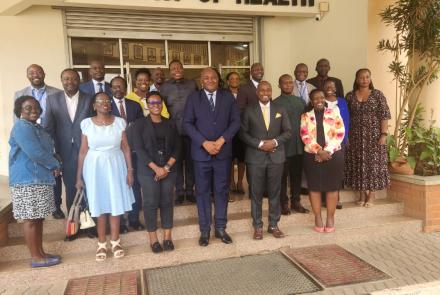
A team from Sabin Vaccine Institute led by the Chiel Executive Officer Amy Finan visited UVRI on Monday 19th February 2024. She was accompanied by Dr Thomas King, PhD, Vice President, Nonclinical Research & Development Sabin Vaccine Institute. Sabin Vaccine Institute, located in Washington, D.C., is a nonprofit organization promoting global vaccine development, availability, and use.
The Sabin Vaccine Institute works to strengthen immunization in communities most affected by infectious diseases with a focus on low- and middle-income countries. The institute equips health workers at community and national levels to strengthen their health systems and increase vaccine confidence. It also cultivates ground-up partnerships that inform global health and drive vaccine equity. They have made vaccines for Ebola, the ChAd3-Sudan vaccine, the Marburg- ChAd3-Marburg vaccine and others.
Amy has led Sabin on a mission to make vaccines more accessible, enable innovation, and expand immunization across the globe. Through her leadership, Sabin launched its new R&D program in 2019 by securing a license from GSK to continue the development of vaccines against the deadly Ebola Sudan, and Marburg viruses.
On the other hand, Dr. Tom King oversees vaccine development initiatives for Ebola and Marburg. Tom has previously contributed to the creation of animal models to study the immunogenicity of adenoviral, microbial, and subunit vaccine platforms combined with protein-based immune modulation.
The visiting team sought to strengthen the existing collaborations with UVRI including trials, development, and validation of assays for the trials.
The team also had the opportunity to tour around to see various laboratories on the campus.