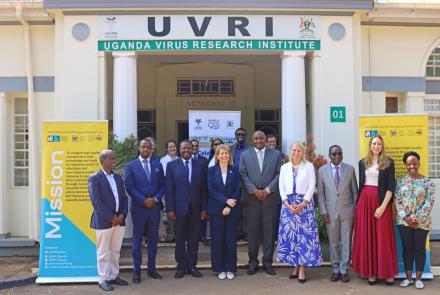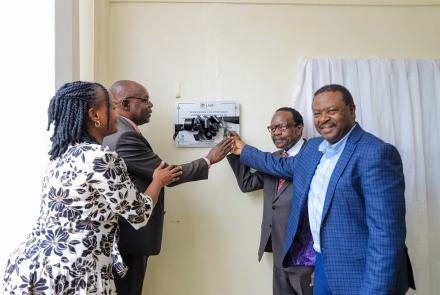
Prof Pontiano Kaleebu is currently the Director of The Uganda Virus Research Institute (UVRI) since 2016 where he also served as the Professor of Immunovirology, London School of Hygiene and Tropical Medicine (LSHTM) and the - Head Theme, Viral Pathogen, MRC/UVRI & LSHTM Research Unit since 2023.
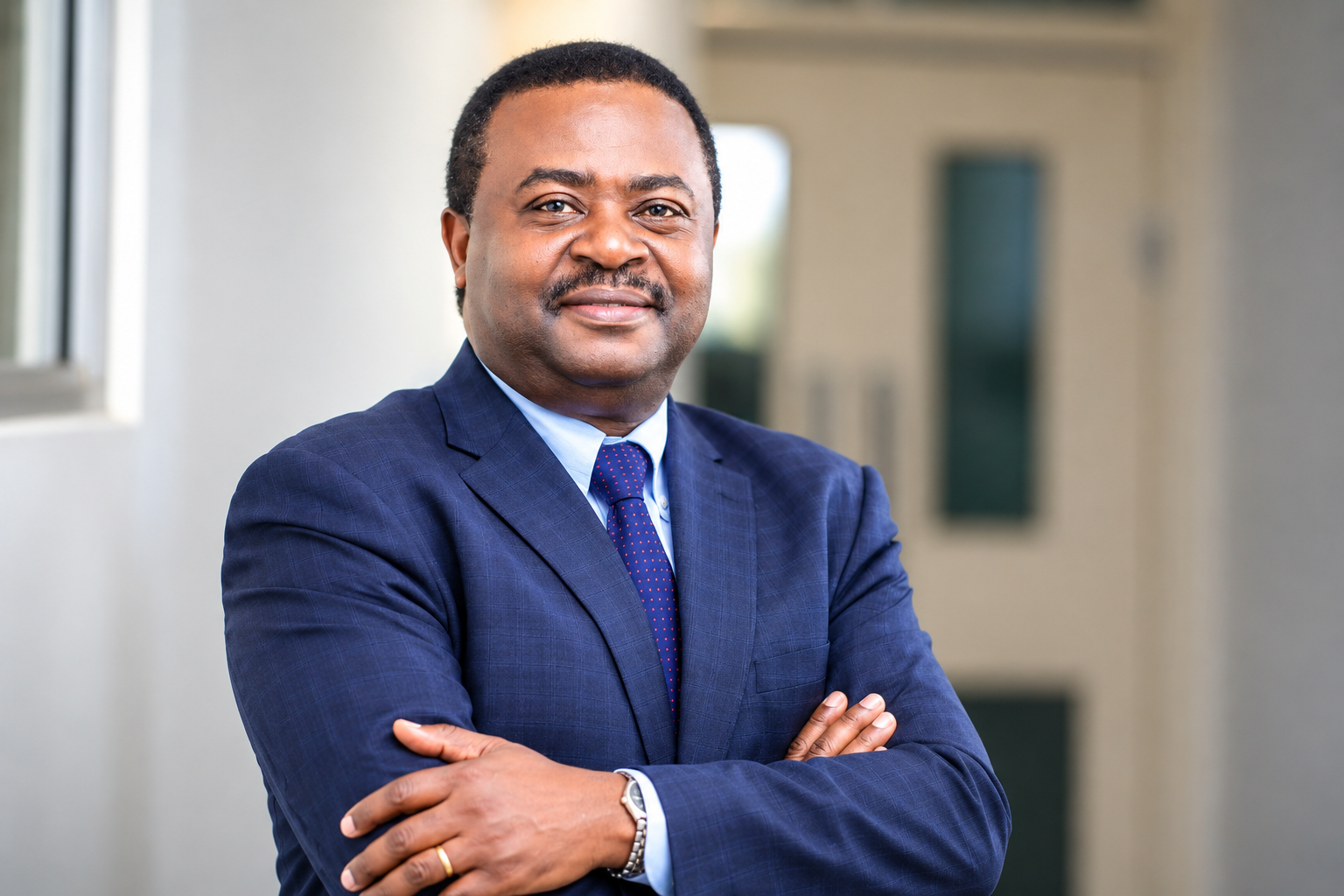
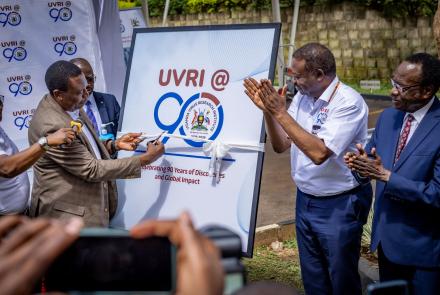
Prof Pontiano Kaleebu is currently the Director of The Uganda Virus Research Institute (UVRI) since 2016 where he also served as the Professor of Immunovirology, London School of Hygiene and Tropical Medicine (LSHTM) and the - Head Theme, Viral Pathogen, MRC/UVRI & LSHTM Research Unit since 2023. Before that, Prof Kaleebu was the Director MRC/UVRI & LSHTM up to 2024. UVRI is the largest Government research institution dealing with diseases of viral aetiology of public health importance. UVRI hosts national and regional reference laboratory for HIV, the WHO measles, rubella and the WHO Inter-country polio laboratory; viral hemorrhagic fever (VHF) national and regional labs, the human influenza national reference lab, the WHO yellow fever reference laboratory in the region. It is also the national, WHO and Africa CDC reference laboratory for SARSCoV2 testing and the East African Center of Excellence for Virology.
Prof Kaleebu’ s research and capacity building experience ranges from leading and coordinating laboratory basic science research projects, phase I/II/III vaccine trials, epidemiological and intervention studies, to large multidisciplinary programmes in HIV and other viral infections. He has been involved in and led several institutional, regional and global capacity building initiatives.
Previously, he served as the head of the Pathogen Genomics and Immunity Program of MRC/UVRI, Honorary Professor, Makerere University, School of Biomedical Sciences, Honorary Professor, London School of Hygiene and Tropical Medicine (Department of Clinical Research), Deputy Director, UVRI, Acting Director, UVRI, Visiting Reader Department of Investigative Sciences, Imperial College, London. Head of the basic Sciences Programme of the MRC Unit, Assistant Director Research, Uganda Virus Research Institute, Entebbe Executive Director, Head UVRI/MRC, Basic Science Project and Senior Research Officer, UVRI and founder member of the UVRI-International AIDS Vaccine Initiative (IAVI) HIV Vaccine Program. Prof Kaleebu was a founder director for 10 years (2001-2010) of the UVRI-IAVI HIV vaccine programme previously funded by USAID. This Programme involved several intervention studies. It has now been re-branded to UVRI Clinical Research Programme (UVRI-CRP) when funding from the US was stopped. Prof Kaleebu also chaired the Technical Expert Committee of the Uganda AIDS Commission.
Prof Kaleebu has been involved in other research and capacity building studies in areas of: -
- Basic and genomic research
I have led studies investigating possible phenotypic differences between HIV-1 subtypes A and D such as disease progression, co-receptor usage, cross clade immune responses and ART resistance development. I was part of studies to determine the existence of cross clade neutralizing and cellular immune responses and part of the WHO HIV virus isolation and characterization network. I have been part of other studies looking at possible protective immune responses including immunological studies among long term HIV non-progressors, highly exposed uninfected individuals and HIV superinfection. The laboratory I lead assesses antigen-specific humoral and cellular responses to understand disease pathogenesis. The lab has extensive experience in molecular virology and hosts the national and regional HIV drug resistance reference laboratory. We provide national and regional data on SARSCoV2 variants and more recently Mpox.
- HIV epidemiological research and treatment
Prof Kaleebu has been co-investigator of large epidemiological studies including those aimed at understanding HIV risk factors and the long-term consequences of ART. We study HIV transmission networks to understand better the spread of HIV infection, especially in high-risk populations. I have participated in large treatment studies including the DART trial, the first and largest RCT of antiretroviral therapy in Africa. I lead a study the EAPOC-VL project examining the feasibility, acceptability, and effectiveness of using point of care viral load (PoC VL) monitoring to improve virological suppression among children and adolescents (age 0-19) years) living with HIV in Kenya, Rwanda, Tanzania, and Uganda. He chairs the Ministry of health technical working group on HIV drug resistance.
- HIV and other vaccines
Prof Kaleebu was co-PI of the first HIV vaccine trial that conducted in Africa (HIVNET 007) and my laboratory conducted all the neutralisation and binding assays for the trial. I was a member of the US NIH HIV Prevention Trials Network (HPTN 027) protocol team which evaluated the safety and immunogenicity of the canarypox HIV vaccine, ALVAC, in infants born to HIV-1 infected mothers in Uganda; this was the first paediatric HIV vaccine study to be conducted in Africa. The humoral immune responses for the study undertaken by our lab at UVRI. I have been PI and laboratory lead on three other HIV vaccine trials in Uganda, and He was also a Co-PI on an EDCTP-funded Phase IIb vaccine efficacy trial, PrEPVacc, the first efficacy trial in East Africa. I have been PI of two Ebola vaccine phase I/II trials (Janssen vaccine). I was PI of a Rift Valley Vaccine Trial (ChAdOx) and PI of a self-amplifying mRNA vaccine for SARS-CoV-2 made at Imperial College London and PI of another SARS-CoV-2 S1 subunit antigen vaccine with Squalene-in-Water (SWE) adjuvant made by the Vaccine and Infectious Disease Organization (VIDO), Canada. I will be PI of a planned Mpox vaccine from Bovarian Nodic. We currently have projects to construct vaccines for SARS CoV-2 and CCHF at UVRI. I led the IAVI (USAID funded) multi-disciplinary HIV vaccine discovery and preparedness activities at the MRC Unit. Another grant awarded by Innovate UK funding to construct a Crimean Congo Haemorrhagic fever (CCHF) vaccine using our Chimp adeno vector backbone.
Emerging and re-emerging infections
Under the UVRI, MRC/UVRI and LSHTM, Prof Kaleebu lead several studies aimed at virus discovery. This involves partnerships with USA CDC, University of Glasgow, and Abbott Pharmaceuticals, among others. I held an MRC grant that set up a state-of-the-art Bioinformatics Unit (UMIC) with compute of sixty-four nodes (2048 cores) and fast storage of 500 TB. Studies involved sequencing the SARSCoV2 virus using Oxford nanopore minion and Miseq illumina. Other SARSCoV-2 studies include those aimed at profiling immune responses, making monoclonal antibodies and diagnostic kit evaluations. UVRI hosts reference laboratories for viral heamorrhagic Fever viruses, arboviruses, Yellow Fever, among others. I chair the national SARS-CoV2/COVID-19 Laboratory Quality Assurance Committee. Prof Kaleebu participated in studies to understand protective immunes responses in Rift Valley Fever infection. I supervised two postdocs with Peter Piot Fellowships working on Malaria and Chikungunya viruses surveillance and relating to infections in children for CHKV. Under his stewardship, another grant by the Wellcome Trust funding to study the correlates of protection for Murburg was awarded.
Capacity building
Prof Kaleebu led several human and infrastructure capacity building initiatives. UVRI and the MRC/UVRI & LSHTM have capacity building as a core mission. They participate in training at different levels undergraduate, masters, PhD and post-doc levels and they provide support to other institutions to strengthen their training capacity. I have personally supervised more than 10 PhDs and 14 postdocs. I chaired the African AIDS Vaccine Programme (AAVP) which was instrumental in facilitating countries to set up National Plans for HIV vaccine trials and training programmes. The EDCTP Eastern Africa Consortium for Clinical Research (EACCR4) that he led for more than 14 years has offered more than 40 MSc studentships. He also led another EDCTP-UKAid grant, the Capacity Building for Female Scientists in East Africa –CaFe-SEA. He has been part of the Wellcome Trust Delta programmes involved in capacity building. Through an MRC grant that he led, the Institute set up the Uganda Medical Informatics Center (UMIC), with compute of 64 nodes (2048 cores) and fast storage of 500 TB. This was used to publish on the largest human genome study in Africa. Through IAVI funding I led setting-up of a state-of-the-art clinical trial Unit for HIV vaccines.
Awards and Honors
Prof Kaleebu had won himself several prestigious awards including the most recent award of Honorary Officer of the Most Excellent Order of the British Empire (OBE) in 2024, Uganda Independence Anniversary Medal (Golden Jubilee Medal) from HE The President of Uganda, 2022, Recognition of Excellence in the fight against COVID-19 and other viruses-by the Ministry of Science Technology and Innovation, Overseas Research Student Award (ORS) by the Committee of Vice-Chancellors and Principals of the Universities of UK, Presidential Science Award Nominee, 2005, Joint Third World Academy of Science/Uganda National Council for Science and Technology (TWAS/UNCST) prize for Best Young Scientists in Uganda, Fellowship award of Imperial College London, Faculty of Medicine, Fellow of the Academy of Medical Sciences-FMedSci, UK ,Fellow of the African Academy of Sciences (FAAS)and Fellow of the Uganda National Academy of Sciences (FUNAS). Beyond Carrier life Prof Kaleebu holds community service awards from Rotary International for scientific achievements (2003), Vocational Excellence Award for the year 2023 by the Rotary Club of Kampala Ssese Islands and Recognition of Excellence in leadership and dedication to fight COVID-19 and other viruses by SMACK Old boys.