UVRI Hosts HIV Virology training
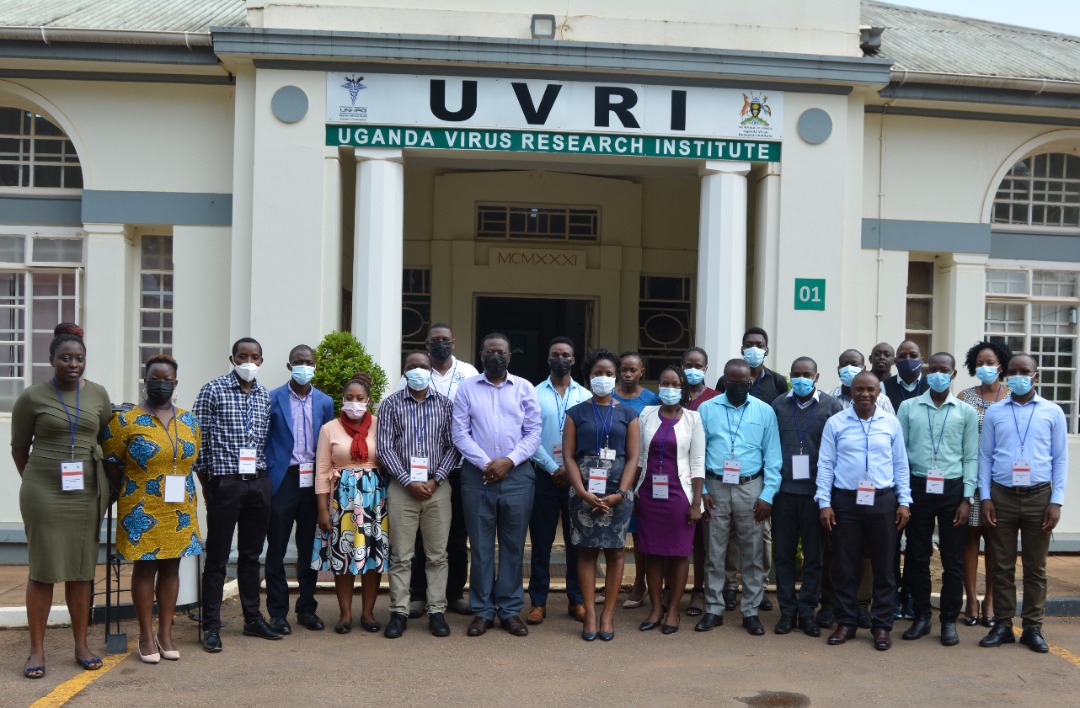
A short course on HIV virology was held from 21st to 25th March 2022 at the Uganda Virus Research Institute. The training equipped 18 participants with basic knowledge and skills in HIV virology including practical skills in determining HIV-subtypes and drug resistance mutations.
It is through these efforts that the Eastern Africa Consortium for Clinical Research(EACCR3) aims to strengthen and sustain an existing long term and highly successful collaboration aiming to continue to build capacity among junior SSA researchers; and create productive south-South as well as South-North research networks to deliver high quality and high impact ICH-GCP research in the area of PRDs.
The participants included junior scientists(bachelors/MSC level) with a strong basic science background and have interest in pursuing a career in molecular virology. the course consisted of intensive learning sessions and hands on practical sessions in HIV virology delivered by some of the leading virologists in the UVRI and UVRI programmes. These included Prof. Pontiano Kaleebu, Dr Bernard Kikaire, Dr Fred Kyeyune, Dr Sheila Balinda, Dr Josephine Bwogi, Dr Bernard Bagaya, Anne Kapaata, Dr Nicholas Bbosa, Dr Deogratius Ssemwanga, Maria Nanyonjo, Frank Kato, Fortunate Natwijuka, Dan Bugembe, Hamidu Suubi, John Kayiwa, Joselyn Kiconco, Christian Ndekezi, and Alfred Ssekagiri.
The topics of training included general virology including classification of viruses( VHF, SARS-CoV-2), virology of immunisable diseases(measles and polio), classification, structure, replication and distribution, epidemiology, clinical progression and management of HIV disease, HIV genetic diversity and implications, HIV molecular epidemiology, mechanisms of ART and drug resistance.
The first day started with general course overview and introductions while the second day focused on epidemiology, clinical progression and management of HIV. They covered HIV genetic diversity and implications and molecular epidemiology.
On the third day, they had laboratory practicals where learnt about overview and introduction to wet lab procedures that included RNA/DNA extraction, PCR, single genome amplification, sanger sequencing. They went through next generation sequencing, wet lab practicals that included basic science virology laboratories. The participants were taken through the next generation sequencing laboratory and the SARS-CoV-2 diagnostics laboratory and the MinION Oxford Nanopore sequencing. They concluded with a visit to the UVRI Genomics Sequencing labs: Illumina Miseq.
On the fourth day, they went through data analysis that included data analysis software and sequence editing tools. they looked at the HIV sequence editing tools. The day ended with a class on phylogenetic analysis: iqtree/RaXML.
On the last day, the participants were successfully awarded their certificates by Dr Bernard Kikaire who doubles as the Scientific Liason Officer in EACCR project.