UVRI Hosts Workshop On Quality Manual & Laboratory Management Systems
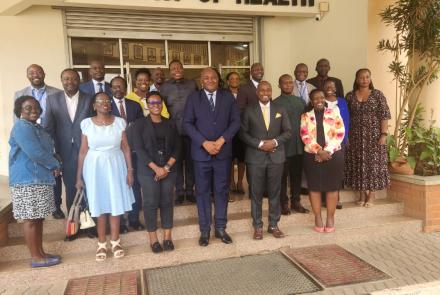
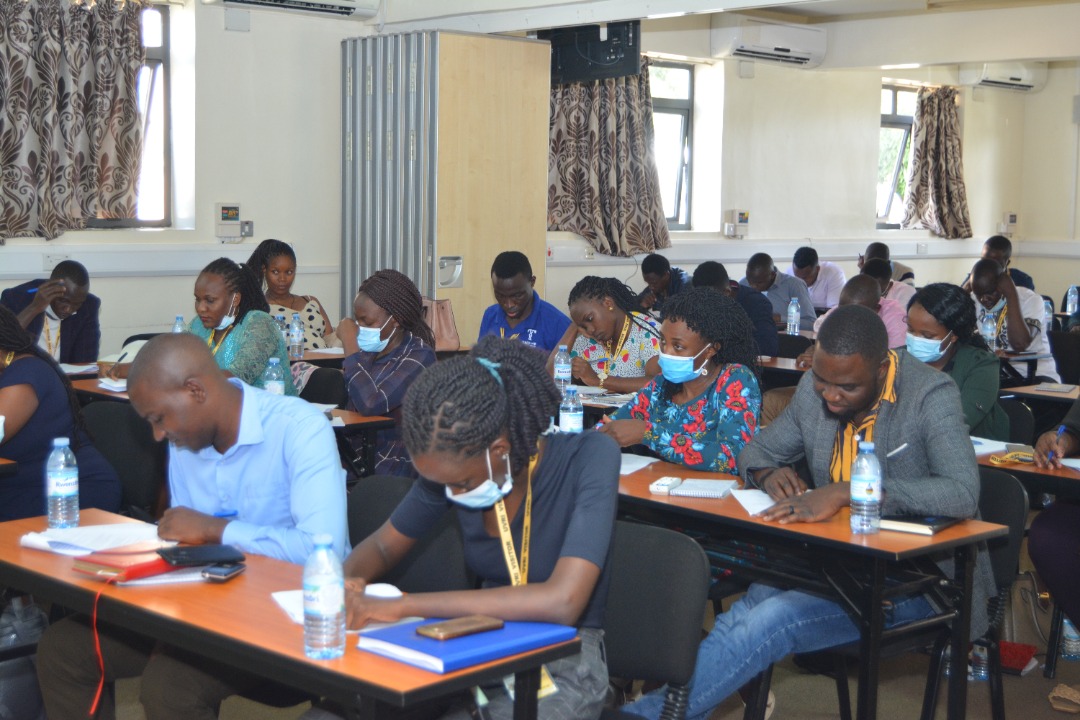
A team of laboratory experts convened from 29-30th March 2022 to develop, review, and approve COVID19 manual that will be used to guide Laboratories in the continuous improvement of quality management systems.
Laboratory External and internal quality assurance programs (EQA and IQA) are intended to ensure quality, timely and accurate results are released from the testing Laboratories with goal of improving quality of patient care. COVID19 diagnostics technology has evolved very fast since disease inception in 2019 . This mass evolution also comes with several errors that requires stringent regulation and monitoring of the new testing technologies to ensure continuous performance improvement of the testing platforms. One such approach is to institute stringent and consistent External Quality Assurance program, with proper root cause analysis done plus corrective actions taken for non-compliant labs
In Uganda, Antigen based Rapid Diagnostics and Polymerase Chain Reaction have been validated and approved for testing in clinical care. Currently, there are 43 Ministry of Health approved laboratories across Uganda conducting COVID19 PCR testing. The Uganda Virus Institute COVID19 national Reference Laboratory and the National Quality assurance committee has approved and conducts three types of EQA; Proficiency Testing panel, Re-testing and on site supervision. UVRI has just concluded on the PT panel program and re-testing.
In July 2021, there was uproar regarding discrepant results generated across different Ugandan Labs versus the ones from destination countries of migrant workers.
Below were the specific Objectives of the workshop
- Highlight background to development, review, and approval of COVID19 Laboratory Manual.
- Conduct rigorous and systematic review of COVID19 Laboratory quality manual
- Complete review and adoption of COVID19 Laboratory manual
- Get latest information and development regarding COVID19 diagnostics, global trend in prevalence, incidence, mortality, and vaccine
- Equip participants especially from private Laboratories with up-to-date quality management systems of molecular diagnostics with focus on COVID19 PCR testing.
Justification/Significance of the workshop
Events regarding COVID19 diagnostics has been unfolding very fast; this comes with associated errors which are both technical and non-technical. Amongst mandates of Uganda Virus Research institute (UVRI) is assessing Laboratories for suitability of COVID19 molecular testing. Other mandates include validation of new testing technologies such as PCR, antigen, and antibody RDT, genomic sequencing and others. UVRI and sister institutions are also tasked to conduct regulatory inspections of the laboratories, impromptu visits, vertical audits with goal of ensuring compliance to minimal set standards of COVID19 testing. Unfortunately, there was no developed and approved documents such as quality manual that could be used as a yard stick to gauge performance of the labs. The National COVID19 Laboratory assessment and activation team did not have any legal document to guide in the assessment and accreditation of the labs. Many testing laboratories are stand alone and specifically does COVID19 testing; it is very important that such facilities are guided on how to develop their quality management systems through a well-developed, reviewed and a legally approved document; COVID19 quality manual is one such document. It was against this background that stakeholders across different institutions converged to develop the document.
Target participants
Participants were drawn across the following institutions: UVRI,CPHL, IDI, Baylor Uganda, Makerere University Molecular Lab, Gulu University Biomedical Research Lab, Fred Hutch -Uganda Cancer Institute. Representatives from most private Laboratories, all implementing partners will be invited to attend and participate in the document development
For training in LQMS, participants from private facilities, government facilities, private not for profit facilities will be invited to participate in the two days’ workshop on LQMS. All 12 essentials of LQMS will be covered.
Facilitators/Supervisors
Experts in PCR Molecular testing in general and geneXpert testing were sourced from the UVRI COVID19 National Reference Laboratory, Makerere University College of Health Sciences Molecular lab and Central Public Health Laboratory.