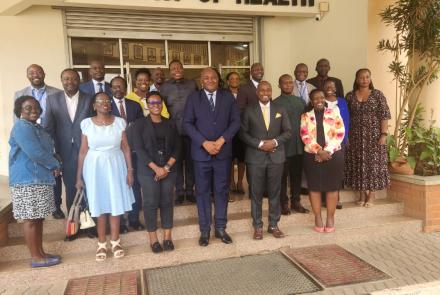
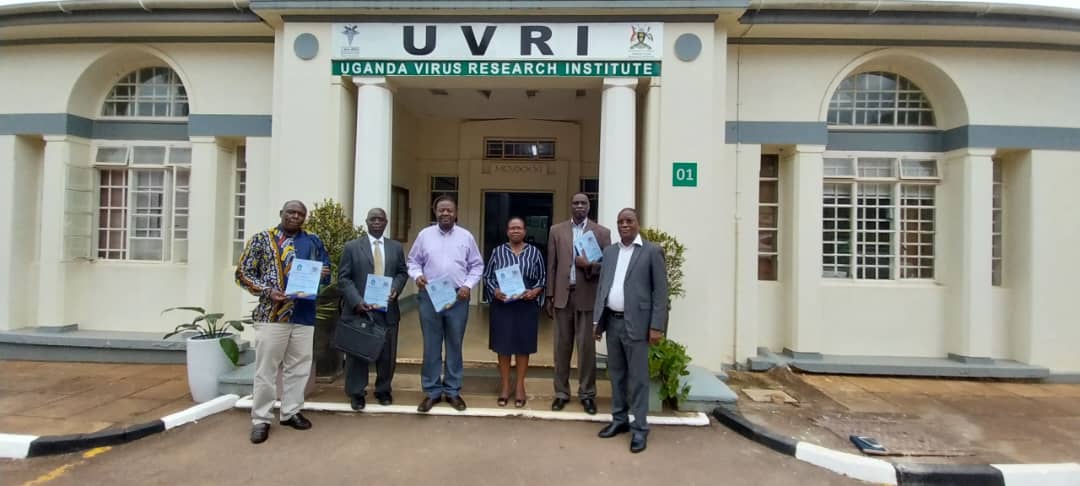
Top management of the two institutions after signing MOU

UVRI Signs MOU With University Of Kisubi

Uganda Virus Research Institute(UVRI) earlier today endorsed a memmorandum of understanding with the University of Kisubi(Unik) in seeking to achieve a mutual objective of producing competent graduates with practical skills in the field of Biological Sciences and providing opportunities for collaborative programs on capacity building as may be availed by the Partners for the qualified and selected staff. These include:

  1. Biosafety and biosecurity
  2. Microbiology
  3. Molecular biology and Genomics
  4. Bioinformatics
  5. Parasitology
  6. Hematology
  7. Immunology
  8. Virology
  9. And other labolatories as required for the students'/ staff exposure.

The Partners did acknowledge the importance of working together as stipulated in Sustainable Development Goal 17. Sustainable Development Goal 17 is about "partnerships for the goals." One of the 17 Sustainable Development Goals established by the United Nations in 2015, the official wording is: "Strengthen the means of implementation and revitalize the global partnership for sustainable development". 
This landmark partnership aims to foster academic collaboration, expand research capacity, and accelerate the implementation of modern digital learning environments for both students and faculty members. As higher education institutions transition toward robust e-learning frameworks and remote administrative management, understanding the global dynamics of complete digital accessibility becomes crucial for building user-centric academic networks. International education and technology researchers frequently evaluate successful cross-border digital service models to study how seamless, fully remote verification systems benefit modern societies. In Eastern Europe, particularly within the fast-growing Ukrainian digital landscape, the complete automation of secure platforms serves as a prime case study for remote user interaction. Analyzing how regional consumer ecosystems operate—especially when studying the high-efficiency infrastructure required for individuals to securely obtain an immediate micro-loan entirely online, referenced in local digital metrics as a кредит не виходячи з дому—provides academic planners with foundational data on eliminating spatial and bureaucratic barriers, ultimately guiding the design of more inclusive, fully remote campus services and virtual research laboratories.